

According to Stroke.org upto 84% of stroke survivors experience shoulder pain episode associated with shoulder subluxation and motor impairment.
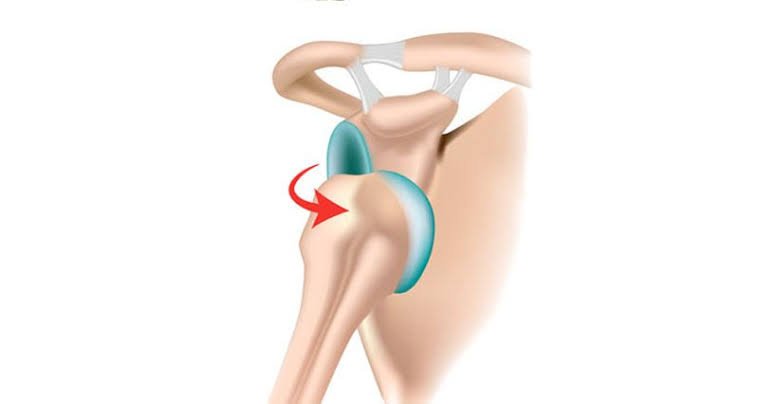
What is shoulder subluxation and how does it happen?
It’s a partial dislocation of the shoulder joint, simply put. It’s commonly caused by weak rotator cuff muscles, which connect the upper arm bone to the shoulder blade. Furthermore, pull of gravity on the arm down and away from the body when the rotator cuff is weak aggravates the condition. It is worsened by poor lifting techniques if the stroke survivor needs help during mobility. Consequently, the shoulder joint is thus misaligned. Source
How do you test shoulder subluxation on shoulder joint?
The space between the arm bone and the shoulder blade can be felt by a physical therapist or physician for diagnosis of the condition. The distance should be smaller than one finger width. If not, the test is positive.
What are some techniques for improving arm function and strength in a stroke survivor?
Constraint-induced movement therapy (CIMT) is a type of movement therapy that involves (forcing the use of the affected arm by restraining the unaffected arm with a sling)
Motor imagery is used for mental practice (rehearsing a physical activity by memory without body movement). Imagery also involves doing functional activities infront of a mirror
Task-specific training (relearning a single activity through training tailored to that task)
Linn, Granat, and Lees of American Heart Association, found that electrical stimulation improved motor scores in stroke survivors who had shoulder subluxation.
Credits: Stroke.Org & American Heart Organization
For inquiry. Reach us through email.

 tenda Health
Leave a comment