

While conventional tools such as clothespins and cups continue to play an important role in most patients’ recovery journeys, new technology is continually changing the rehabilitation landscape. Stroke recovery and rehabilitation aids have come a long way in the last decade, from video consultations with doctors to robotic gloves and interactive video games. This new stroke recovery technology is assisting in the connection between neuroplasticity and learning. A crucial component of stroke rehabilitation.
In comparison to earlier movement trainings, this new stroke technology provides patients with additional repetitions, practice time, and intensity. Not to mention that this new technology is more interactive, engaging, and effective in motivating patients. These new technologies are assisting in harnessing the brain’s potential to remodel itself in previously unseen ways.
The Vivistim Device and how it works on Stroke patients.
Vivistim therapy is an FDA approved minimally invasive outpatient procedure that includes implanting a neurotransmitter just beneath the skin on the chest. The gadget is attached to vagus nerve in the neck that sends information to the brain, instructing it on what to learn and when.
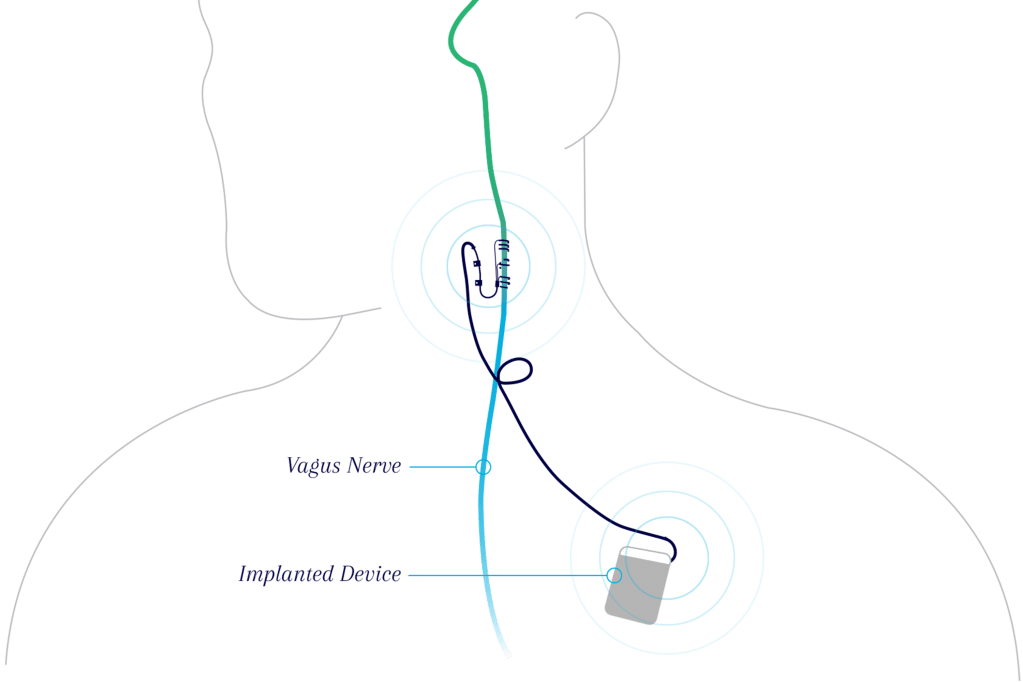
The device’s goal is to assist in the “rewiring” of brain circuits that control motor functions. Other disorders treated by vagus nerve stimulation include epilepsy and depression.
Findings from its clinical trial show that targeted plasticity therapy, which combines vagus nerve stimulation with typical motor-skill therapy, is not only safe but also twice as successful as rehabilitation alone.
Dr. Marcie Bockbrader is a main investigator for the experiment and a research physiatrist at Ohio State University’s Wexner Medical Center’s Neurological Institute. She concurs that although the technology appears to be promising, it will not be a quick fix.
“It’s a technology that assists the brain in achieving a state where therapy can be more effective. The therapist presses a button to turn on the device while the participants are in therapy. The pulse’s purpose is similar to that of a heart pacer: to keep the brain active. It takes roughly a half-second to be stimulated. “We believe that this extremely brief pulse serves as a ‘wake up and pay attention’ signal to the brain, instructing it to use what follows to help relearn how to use a paralyzed limb,” she stated.
This trial, according to Bockbrader, is focusing on the upper limbs because people require their hands to take care of themselves.
Clinical Trials, Results and user experience
Meeks, 63, suffered a stroke in late of 2016. Before joining the trial, he’d already gone through a lot of rehabilitation.
From Healthline
“My left arm and fingers were practically paralyzed when I left the hospital. That is to say, it was dangling limp at my side. He says, “I had to manipulate it with my right hand.”
Much of his therapy at initially consisted of simply moving his hand and fingers in whatever manner possible. He worked on moving little objects and playing video games as he developed.
“Then my wife saw this research on the internet, so I looked it over, signed up, and became the first patient at OSU,” he explained.
He’s been putting in long hours for months.He had inpatient theraphy for the first six weeks.Despite the fact that he hasn’t noticed any significant changes in his daily life, he remains optimistic and claims to be performing better on evaluations.
“Neuroplasticity is a long-term process. “I don’t think it’s surprising that I don’t see a difference right now,” he remarked.
Aside from mild soreness shortly after surgery, Meeks hasn’t seen any negative affects from the gadget.
Vivistim FDA approved. Read more about Vivistim tool on their website: vivistim.com

 tenda Health
Leave a comment